Key Findings
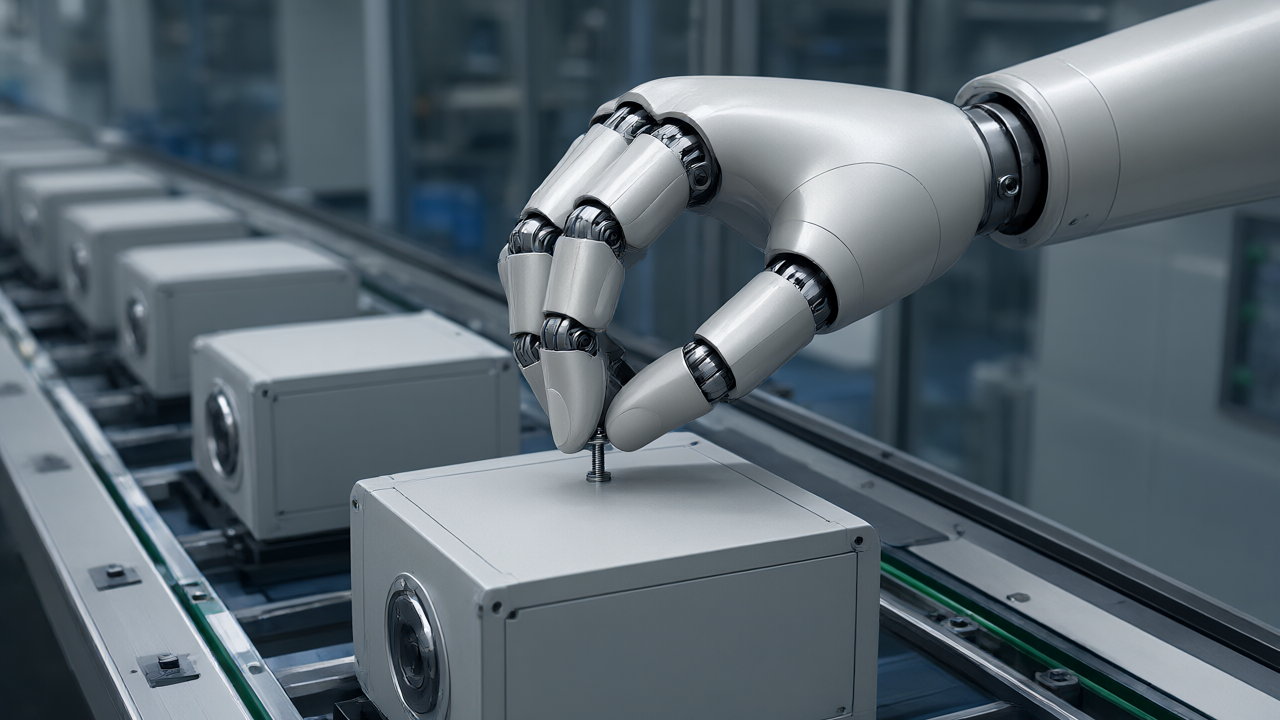
Agilink’s OmniHand successfully completed a proof-of-concept trial on a production line at Wolong Electric in Shaoxing. The system performed 72 consecutive operations—including material loading, screw fastening, self-checks, and unloading—without real-time human intervention. A full cycle took 8.5 minutes, compared to eight minutes for a skilled worker. The trial reported a 98% task success rate over eight hours of continuous operation.
Technical Details
The most challenging task identified was fastening captive screws, where a one-millimeter hand movement could cause a three-to-four millimeter error at the tool tip due to screw wobble and cable recoil. To mitigate this, the system combined visual and tactile feedback for real-time correction. Agilink utilized reinforcement learning for individual operations and a software agent framework to coordinate the full sequence and reverse failed steps.
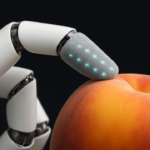
To improve training data, Agilink launched the OmniGlove Pro. The fabric glove utilizes a combination of electromagnetic field (EMF) tracking for fingertip positions and inertial measurement units (IMUs) to reduce interference. Densely arranged tactile sensors capture touch signals and hand positions at high frame rates, compensating for positioning errors caused by fabric deformation.
Background & Context
Agilink CEO Qiao Tianjie noted that while conventional grippers handle 70–80% of predictable tasks, dexterous hands are required for the remaining 20–30% of precision-intensive operations. Chief scientist Huang Bidan highlighted that visual datasets alone lack critical physical interaction data, such as shear force and temperature, which often leads to simulation-to-reality failure.
Significance & Outlook
As of October, cumulative production of the OmniHand series exceeded 15,000 units. Agilink intends to scale production into the tens of thousands to stabilize supply chains and reduce costs. While the robotic hands are currently used at Chimelong in Zhuhai, the Wolong Electric station is expected to enter regular production by the end of 2026. Agilink also plans to share its tactile data, manipulation models, and deployment framework with other robot manufacturers and system integrators.
Source: https://kr-asia.com/agilink-launches-tactile-data-glove-after-72-step-robotic-hand-trial
Get our weekly technology intelligence — free
Receive an infographic that lets you judge at a glance whether each field’s analysis report is worth reading.
Subscribe Free — Weekly Tech Intelligence
By subscribing, you’ll receive Troy-Technical’s weekly technology intelligence newsletter.
- Your email and selected fields are used only to deliver the newsletter.
- We never share your information with third parties.
- You can unsubscribe anytime via the link in each email.
See our Privacy Policy for details.
Takes about a minute · Unsubscribe anytime