

Key Findings
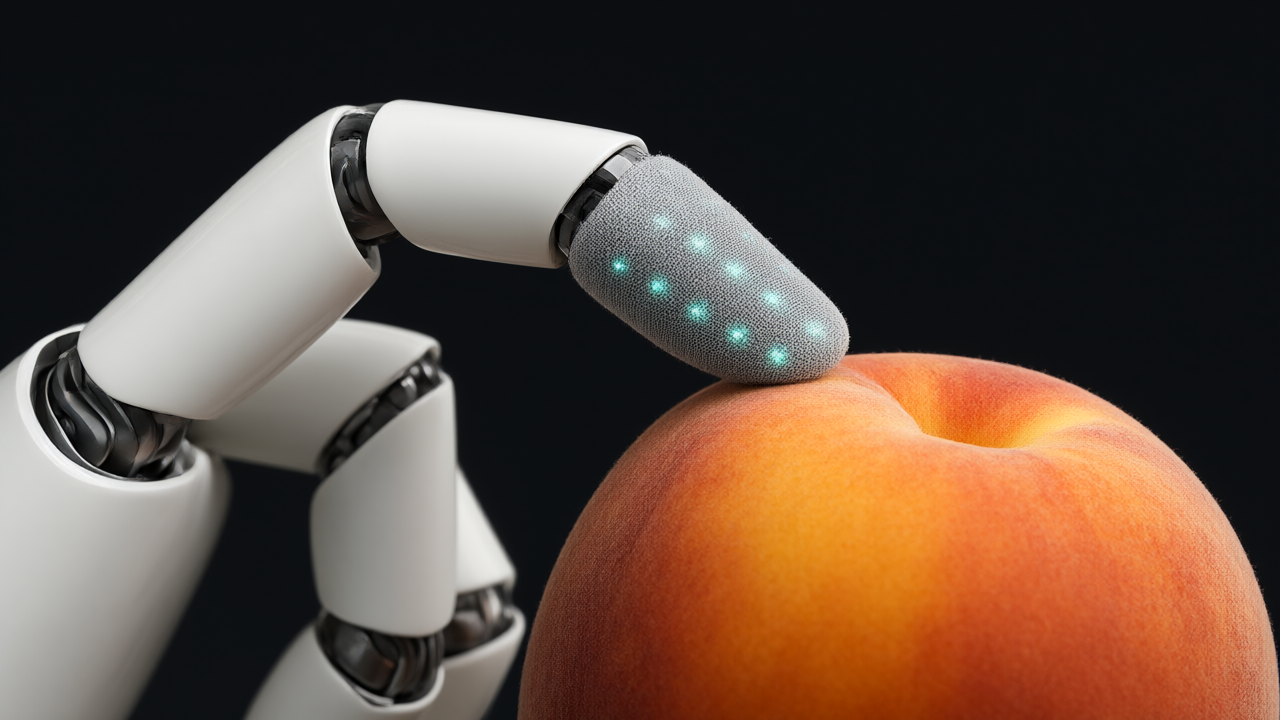
The developed artificial skin allows robotic hands to sense and process tactile signals with high speed and accuracy. The system can read more than 10,000 sensing elements 100 times per second, achieving a full sequence from sensing to interpretation in about 23 milliseconds. In practical tests, a robotic finger equipped with this skin successfully handled soft solder wire only 0.2 millimetres thick and adjusted its grip dynamically as wire thickness changed. Additionally, the system can distinguish between 10 everyday object categories with 98.2% accuracy, even after a 268-fold reduction in data.
Technical Details
To overcome common response delays associated with high-density sensing points, the researchers combined flexible electrodes with a soft gel containing electrically charged particles. Pressure changes alter the electrical response at the interface of the gel and electrodes, which the system measures to determine touch signals.
The system manages high-density data through the following methods:
- Frequency Multiplexing: Different signal frequencies are assigned to sensing points within each sensor bundle, allowing signals to be separated even when arriving simultaneously.
- Signal Interpretation: Signal frequency identifies the specific sensing point, while signal strength indicates the level of pressure.
- Data Compression: The circuitry avoids interference between neighboring sensors and compresses raw signals to reduce the volume of data sent for analysis.
Background and Context
Many existing artificial skins struggle with processing delays when scaling to thousands of sensing points. This research addresses the latency and accuracy trade-off. To ensure hardware longevity, the team also integrated an artificial “pain signal” that alerts the robot to potential damage to the skin covering.
Significance and Outlook
The ability to handle fragile items, such as pencil lead, and react to sharp objects like needles before puncture demonstrates a significant leap in robotic dexterity. While the current electronic processing circuits occupy considerable space, the researchers suggest that migrating these circuits to custom-made chips could bring the interpretation hardware closer to the flexible sensing layer.
Source: https://www.electronicsforu.com/news/artificial-skin-gives-robotic-fingers-a-sense-of-touch
Get our weekly technology intelligence — free
Receive an infographic that lets you judge at a glance whether each field’s analysis report is worth reading.
Subscribe Free — Weekly Tech Intelligence
By subscribing, you’ll receive Troy-Technical’s weekly technology intelligence newsletter.
- Your email and selected fields are used only to deliver the newsletter.
- We never share your information with third parties.
- You can unsubscribe anytime via the link in each email.
See our Privacy Policy for details.
Takes about a minute · Unsubscribe anytime