
Key Findings
The T-Rex (Tactile-Reactive Dexterous Manipulation) AI achieved an average success rate of 65% in 12 real-world tasks involving physical contact, such as turning keys and flipping pages. This performance represents a 30-percentage-point increase over comparison methods, which scored 35%. When tactile information was removed, the success rate dropped to 42%, validating the necessity of high-speed tactile response for dexterous manipulation.
Technical Details
T-Rex addresses the limitations of traditional Vision-Language-Action (VLA) models, which rely heavily on camera imagery and suffer from low update frequencies that cannot match the speed required for tactile reactions. The architecture integrates two distinct layers: a low-frequency “visual-language-based action generation” layer for general movement and a high-frequency “tactile-based action correction” layer for immediate adjustments to slips or deformations.
The model was trained using a multi-stage process:
- General Knowledge: Learning from 22,889 hours of first-person human perspective video.
- Robot-Specific Learning: Training on a dataset of over 7,700 dual-arm robot operation samples (totaling 100 hours) involving 200+ daily items and 22 basic movements. This data synchronized video, robot state, natural language instructions, and tactile sensor data (force and deformation).
- Fine-tuning: Applying approximately 100 demonstration samples per specific task.
Background & Context
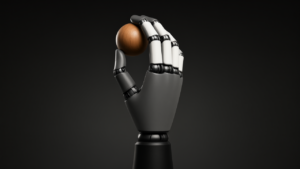
Human dexterity relies on the ability to instantaneously adjust movements based on force and slip felt by the fingertips. Previous AI models struggled with these nuances due to a lack of large-scale tactile datasets and the latency inherent in image recognition. T-Rex overcomes this by avoiding the need to restart image recognition during active contact, instead relying on the integrated tactile feedback loop.
Significance & Outlook
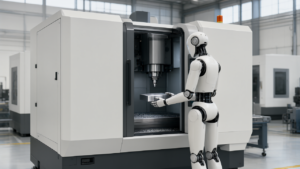
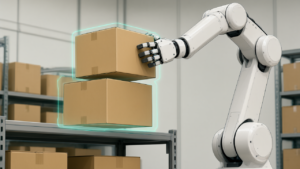
Panasonic HD intends to deploy this technology in industrial environments, specifically for inserting components in manufacturing and handling flexible materials in logistics. By automating tasks requiring precise force adjustments, the company seeks to reduce the burden on human workers and mitigate labor shortages.
Source: https://aismiley.co.jp/ai_news/panasonic-robot-manipulation-ai/
Get our weekly technology intelligence — free
Receive an infographic that lets you judge at a glance whether each field’s analysis report is worth reading.
Subscribe Free — Weekly Tech Intelligence
By subscribing, you’ll receive Troy-Technical’s weekly technology intelligence newsletter.
- Your email and selected fields are used only to deliver the newsletter.
- We never share your information with third parties.
- You can unsubscribe anytime via the link in each email.
See our Privacy Policy for details.
Takes about a minute · Unsubscribe anytime