Key Findings
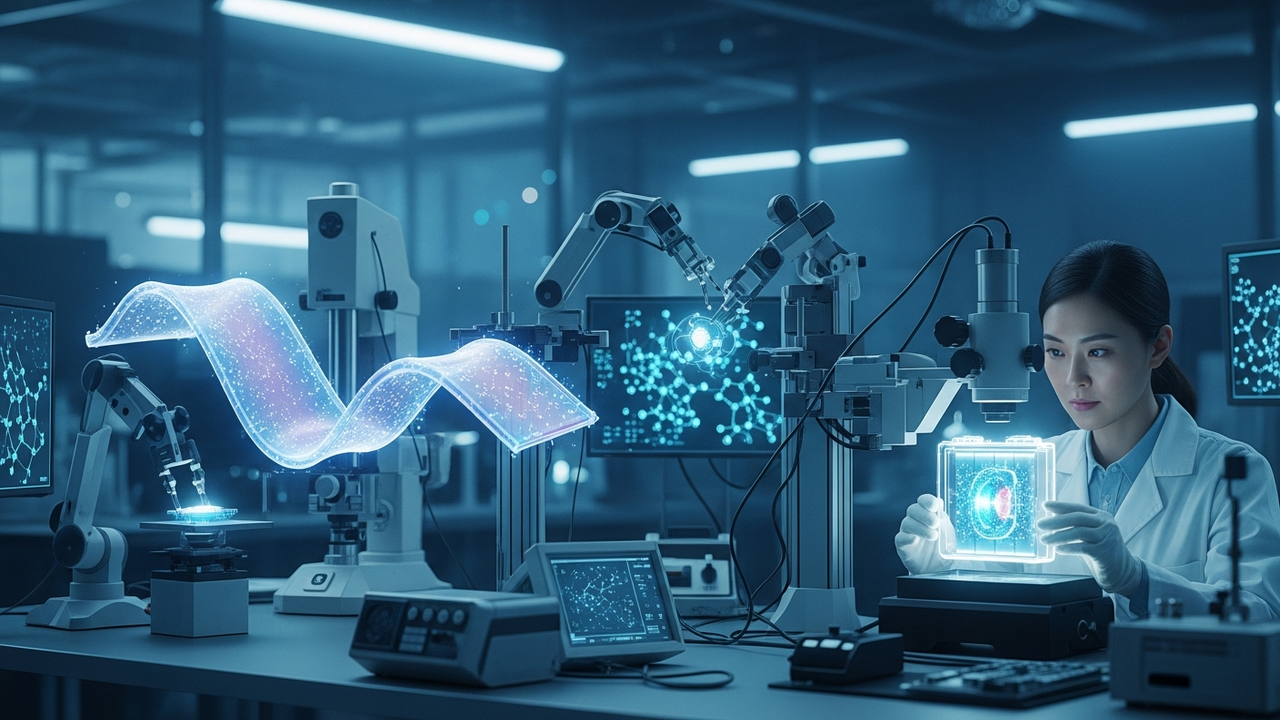
A joint research team comprising the Korea Research Institute of Chemical Technology, Yonsei University, and Sungkyunkwan University has developed an innovative solution to the critical problem of solid electrolyte cracking, a major cause of performance degradation in sulfide all-solid-state batteries. By integrating an ‘elastic ion-conductive polymer’ within the sulfide solid electrolyte, they successfully extended stable charge-discharge cycling to over 2500 hours, thereby tripling the battery lifespan compared to conventional designs. This technology dramatically improved capacity retention after 200 cycles, from 22% to an impressive 75%.
Technical Details
Sulfide all-solid-state batteries are promising candidates for next-generation batteries due to their high ionic conductivity and energy density. However, they face a significant challenge: volume changes during charge-discharge cycles often induce microscopic cracks in the solid electrolyte, leading to increased interfacial resistance, accelerated dendrite formation, and reduced battery life. The research team developed a specialized polymer that is both flexible and ionically conductive to act as a stress-relaxation material between the solid electrolyte and electrodes. This ‘elastic ion-conductive polymer’ effectively suppresses crack formation in the electrolyte and maintains excellent contact with the electrodes, enabling stable lithium-ion transport over extended periods. The demonstration of over 2500 hours of stable operation and 75% capacity retention after 200 cycles clearly indicates the practical durability of this approach.
Background & Context
All-solid-state batteries are at the center of intense global development competition as the ‘ultimate battery’ to achieve extended range, rapid charging, and improved safety for electric vehicles (EVs). Sulfide solid electrolytes are among the most promising materials, but their mechanical fragility has been a major barrier to practical application. This breakthrough by the Korean research team resolves a critical challenge in manufacturing processes and material design, potentially significantly accelerating the commercialization of all-solid-state batteries. High-durability batteries, in particular, directly contribute to reducing the lifecycle costs of EVs, offering substantial benefits to both consumers and automakers.
Strategic Significance & Outlook
These research findings represent a crucial step towards the practical implementation of sulfide all-solid-state batteries and will likely serve as a key design guideline for future development. Subsequent efforts will focus on further optimizing the elastic ion-conductive polymer and verifying its applicability to large-scale production. If successfully commercialized, this technology is expected to be adopted in a wide range of applications demanding high safety and long lifespan, including EVs, drones, robots, and stationary energy storage systems. This will further solidify South Korea’s position as a global leader in next-generation battery technology.
Source: https://finance.biggo.com/news/b85d4a18-4225-4051-8f2e-538f6b098d30
Get our weekly technology intelligence — free
Receive an infographic that lets you judge at a glance whether each field’s analysis report is worth reading.
Subscribe Free — Weekly Tech Intelligence
By subscribing, you’ll receive Troy-Technical’s weekly technology intelligence newsletter.
- Your email and selected fields are used only to deliver the newsletter.
- We never share your information with third parties.
- You can unsubscribe anytime via the link in each email.
See our Privacy Policy for details.
Takes about a minute · Unsubscribe anytime


Comments