Key Findings
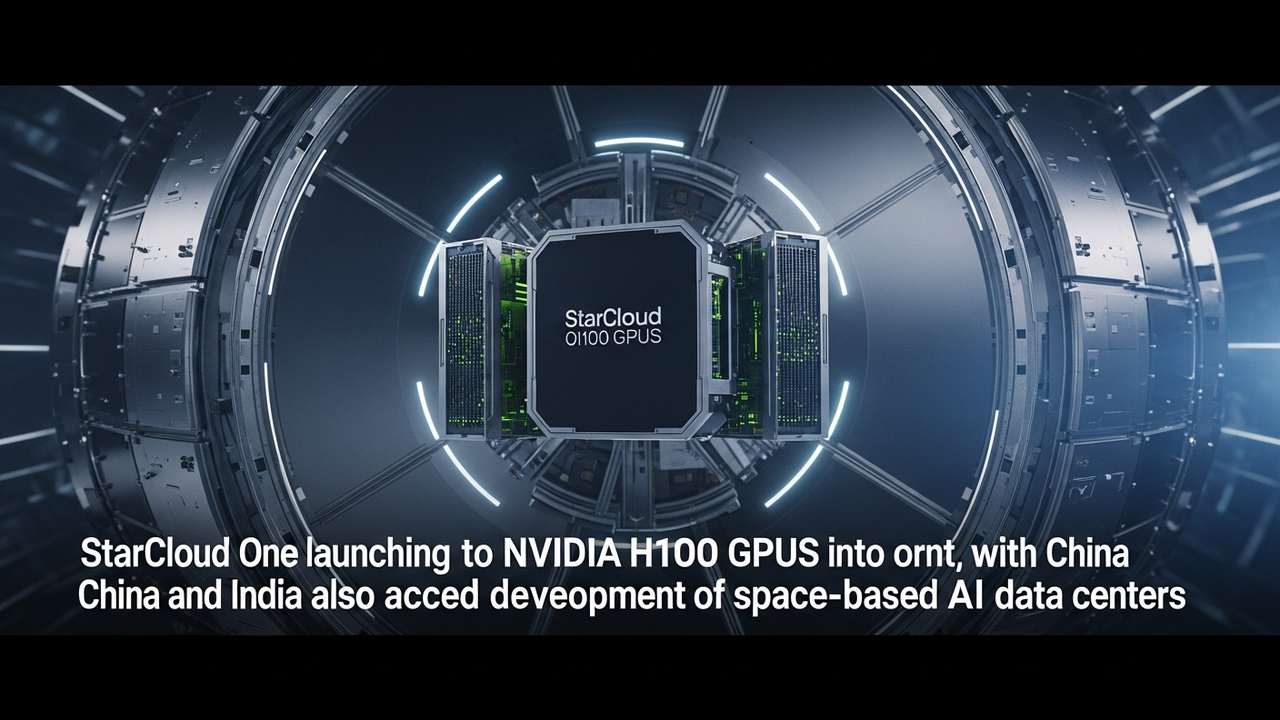
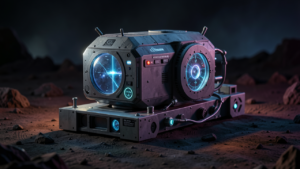
StarCloud One has successfully deployed NVIDIA H100 GPUs into Earth orbit, demonstrating the stable operation of advanced AI chips in the space environment. This groundbreaking achievement represents a significant step towards realizing orbital data centers, which aim to address terrestrial limitations in AI computational capacity, power supply, and physical footprint. Concurrently, nations like China, with plans for a 200,000-satellite network, and India, where Sarvam AI and Pixxel are jointly developing the ‘Pathfinder’ orbital data center satellite, are also accelerating their space AI infrastructure development.
Technical & Clinical Details
The successful operation of NVIDIA H100 GPUs, cutting-edge processors designed for AI workloads, in orbit signifies that space-based data centers can handle sophisticated AI computations. In space, the vacuum provides natural cooling, and continuous solar energy supply significantly mitigates the thermal and power challenges faced by terrestrial data centers. China’s planned 200,000-satellite network aims to provide a massive distributed AI computing capability, with applications ranging across Earth observation, communications, and defense. The ‘Pathfinder’ satellite, developed by India’s Sarvam AI and Pixxel, is intended as a dedicated platform for training and inferencing AI models in orbit, specifically enhancing edge AI capabilities for immediate processing of vast amounts of space-derived data.
Background & Context
The rapid advancement of AI technology generates astronomical amounts of data and demands unprecedented computational power. This demand is pushing terrestrial data centers to their physical and infrastructural limits. As a solution, space-based data centers are gaining significant attention, with major tech players like Google (Project Suncatcher), Amazon (AWS Ground Station), and Microsoft (Azure Orbital) also investing in this domain. StarCloud One’s H100 GPU demonstration is at the forefront of this new space race, highlighting the aggressive moves by countries like China and India as they strive to establish dominance in space AI infrastructure as a national strategy.
Strategic Significance & Outlook
Orbital AI data centers are projected to become an indispensable component of future digital infrastructure. StarCloud One’s success demonstrates the reliable functionality of high-performance AI hardware in space, which will likely encourage further investment and technological innovation in this field. The ambitious development plans by China and India clearly indicate that space AI infrastructure is not merely a technological experiment but a critical part of national competitive strategies. This promises to expand terrestrial data processing capabilities, foster new space economies, and enable faster, more efficient space exploration and Earth observation. The era where space becomes the new ‘computational frontier’ for the AI age may be closer than anticipated.
Get our weekly technology intelligence — free
Receive an infographic that lets you judge at a glance whether each field’s analysis report is worth reading.
Subscribe Free — Weekly Tech Intelligence
By subscribing, you’ll receive Troy-Technical’s weekly technology intelligence newsletter.
- Your email and selected fields are used only to deliver the newsletter.
- We never share your information with third parties.
- You can unsubscribe anytime via the link in each email.
See our Privacy Policy for details.
Takes about a minute · Unsubscribe anytime




Comments