Key Findings
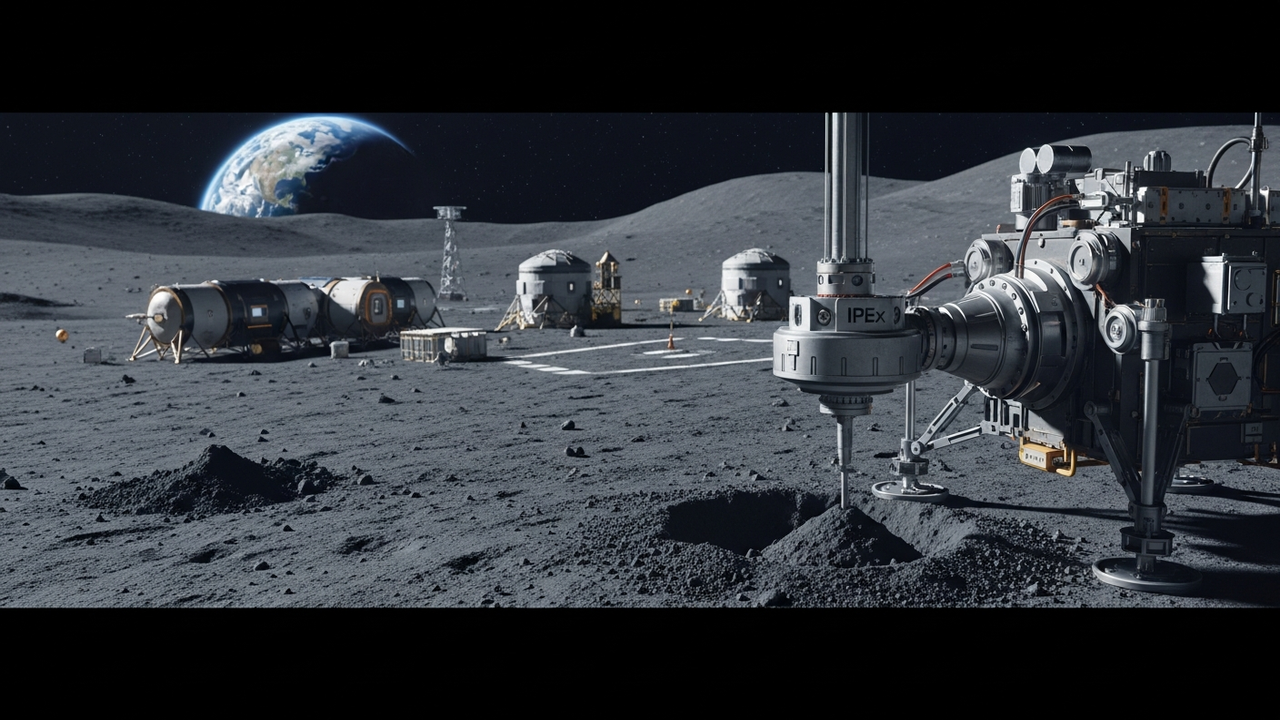
NASA is actively pushing forward with its lunar base plan, designed to enable long-term human exploration and a sustained presence on the Moon. As a core component of this technological development, the In-Situ Resource Utilization Pilot Excavator (IPEx) successfully completed excavation tests using simulated lunar soil. This achievement represents a significant advancement towards the practical implementation of In-Situ Resource Utilization (ISRU) technology on the lunar surface.
Technical & Clinical Details
For a lunar base to be viable, self-sufficient operational capabilities that do not overly rely on material transport from Earth are essential. ISRU technology aims to extract lunar resources (regolith, water ice, etc.) and convert them into oxygen, water, construction materials, and rocket fuel. The IPEx excavator is responsible for the initial step in this ISRU chain: resource acquisition. During the recent tests, IPEx demonstrated its ability to efficiently excavate simulated lunar regolith and extract resources. This excavator is designed to withstand the harsh lunar environment, including cryogenic temperatures, vacuum, and abrasive lunar dust. Furthermore, to support lunar base operations, reliable power supply systems (solar and nuclear power), autonomous robotic technologies for hazardous tasks, and mitigation strategies for lunar dust (which can damage electronics and human health) are all indispensable. The success of IPEx marks a significant step towards realizing a lunar system where these critical technologies are integrated.
Background & Context
NASA’s Artemis program aims not just for a return to the Moon after the Apollo era, but for establishing a sustainable lunar presence and using it as a stepping stone for crewed missions to Mars. For this vision to be realized, the construction of a lunar base is critical, and ISRU technology is one of its most important components. Given the immense cost of transporting materials from Earth, the ability to generate resources locally dramatically enhances the economic viability and sustainability of lunar exploration. NASA is strengthening partnerships with commercial entities and research institutions to accelerate innovation in lunar technologies.
Strategic Significance & Outlook
The successful testing of the IPEx excavator significantly boosts the feasibility of ISRU technology on the Moon, paving the way for in-situ production of water and oxygen at future lunar bases. This will reduce the construction and operational costs of lunar bases, making long-term habitation more realistic. Along with further ISRU development, NASA aims to integrate lunar nuclear power systems, advanced robotics, and lunar dust mitigation technologies, with the goal of creating an environment where humans can actually reside on the Moon by the 2030s. The Moon will continue to increase its strategic importance as a new human habitat and as a departure point for deep-space exploration.
Source: https://www.nasa.gov/moonbase/
Get our weekly technology intelligence — free
Receive an infographic that lets you judge at a glance whether each field’s analysis report is worth reading.
Subscribe Free — Weekly Tech Intelligence
By subscribing, you’ll receive Troy-Technical’s weekly technology intelligence newsletter.
- Your email and selected fields are used only to deliver the newsletter.
- We never share your information with third parties.
- You can unsubscribe anytime via the link in each email.
See our Privacy Policy for details.
Takes about a minute · Unsubscribe anytime






Comments