TROY TECHNICAL · BEGINNER’S GUIDE
READ THIS FIRSTDrug discovery and delivery — An Introduction
A promising active ingredient is not yet a medicine.
Japanese version →A candidate can work well in cultured cells yet fail to help people. Does it reach the relevant site, remain active long enough, avoid unacceptable harm and have consistent quality? This guide follows one connected path: choose a target, make an intervention, deliver it and test whether it helps.
01Begin with the disease and the point of intervention
Disease involves processes such as overactive proteins, missing functions and abnormal immune activity. A target is something an intervention aims to affect. The starting hypothesis is that changing it will improve a meaningful part of the disease.
Strong target binding may still fail to alter the disease enough. A response in cells can be bypassed by other processes in the body. Evidence of molecular activity and evidence of benefit to patients are not interchangeable.
Background: [1]
02A modality is a type of intervention
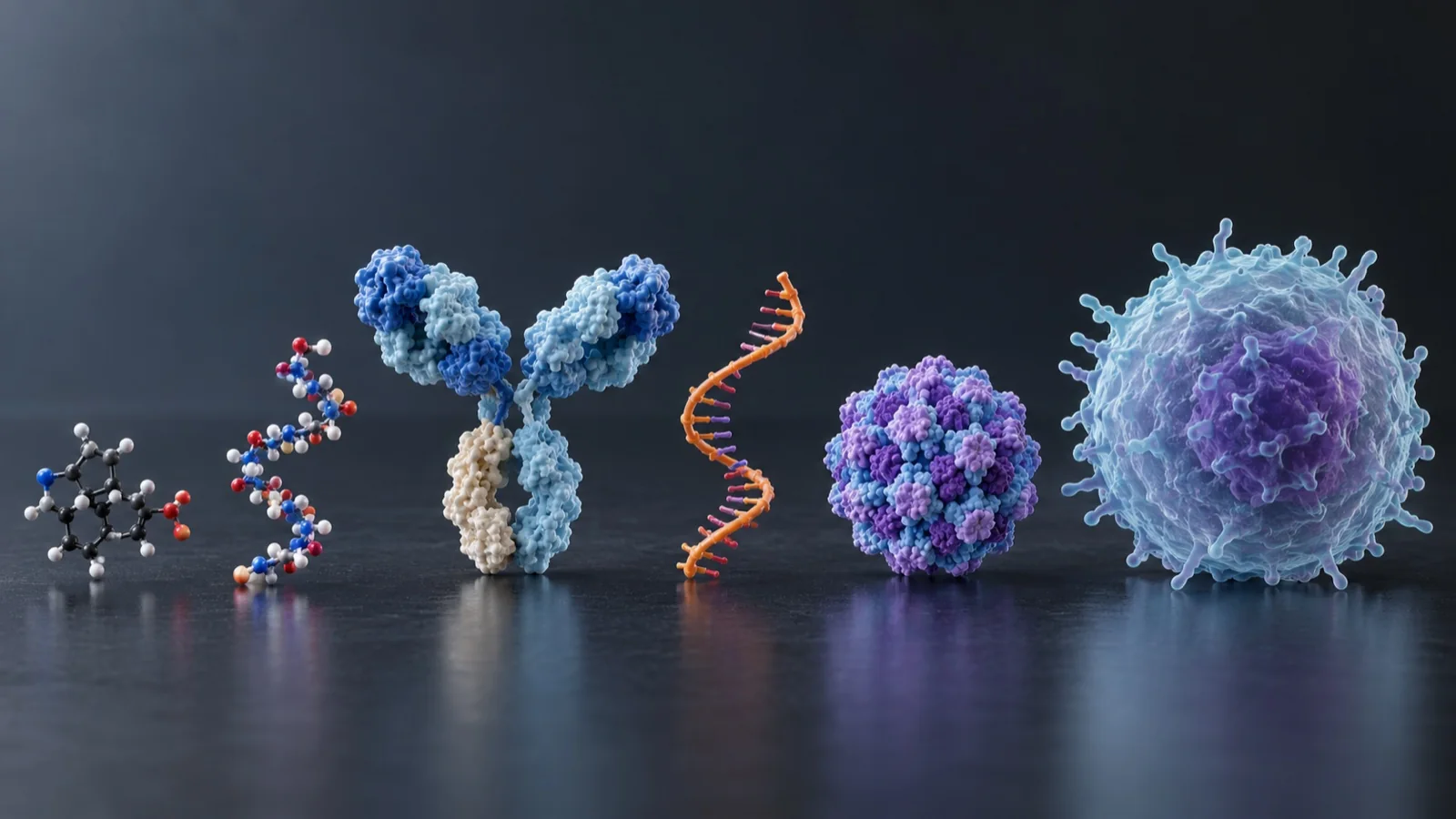
Small molecules, antibodies, nucleic acids and cells are examples of modalities: types of therapeutic intervention. Small molecules are relatively small chemical compounds; antibodies are recognition proteins; nucleic-acid approaches interact with genetic information or its use. Some treatments use engineered cells.
Newer does not always mean better. Suitability depends on where the target is, how long an effect is needed, and whether delivery and manufacturing are feasible. Start with the reason for choosing a tool, not its novelty.
Background: [1]
03Delivery design concerns where and when a drug is available
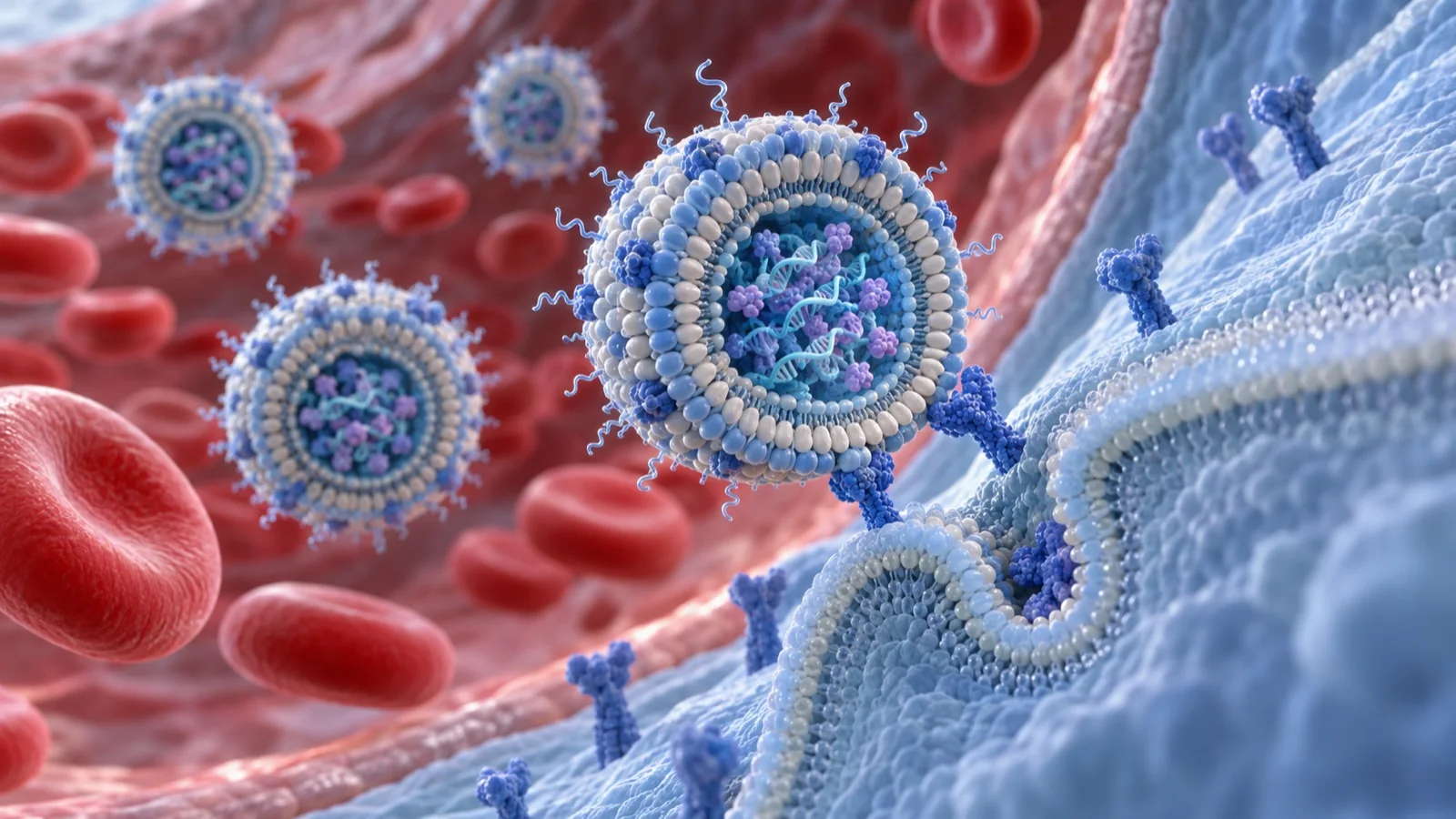
After administration, a substance moves, changes and is eliminated. Being present in blood does not guarantee access to the brain or the inside of a cell. Drug delivery systems, or DDS, adjust availability through carriers, materials, administration routes and release rates.
Liposomes and lipid nanoparticles are examples of carriers that can protect and transport a payload. The body is not a postal system with a simple address label. Organ distribution, immune interactions and cellular uptake remain barriers. Targeting does not guarantee delivery only to the desired destination.
Background: [2]
04Look beyond dose to exposure over time
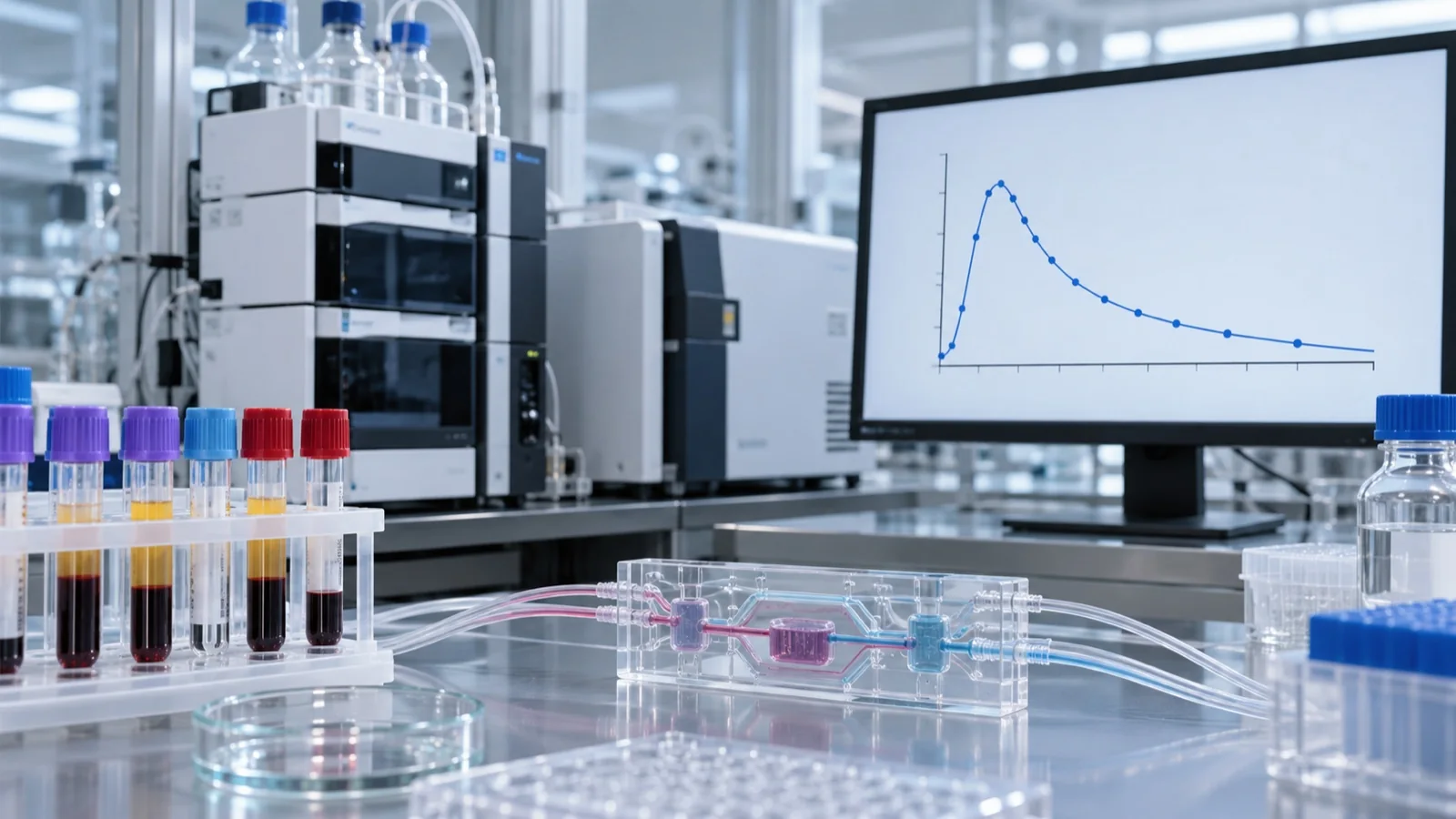
The same dose can produce different effects when absorption or elimination differs. Pharmacokinetics, or PK, studies absorption, distribution, metabolism and excretion: what the body does to a drug. The drug’s effects on the body are a related but different question.
Too little exposure may not work, while excessive exposure can increase harm. Longer persistence is not automatically beneficial. Concentration at the relevant site can be hard to measure, so blood levels and biomarkers need interpretation appropriate to their purpose.
Background: [1]
05A medicine needs comparative evidence and consistent quality
Nonclinical research precedes clinical studies of safety and effects in people. The comparator, patient population, outcomes and follow-up determine what a study can establish. A better laboratory marker does not necessarily mean better symptoms or survival.
Development also asks whether a consistent product can be manufactured with controlled impurities and variability. Safety monitoring continues after approval. This is an explanation of development, not a recommendation or assurance of approval for any treatment. Use the routes below to explore interventions, delivery and evidence.
Background: [3]
Connect the ideas in one situation
ILLUSTRATIVE SCENARIO — NOT A PERFORMANCE CLAIM
Suppose a candidate works in cultured cells
Next ask whether the relevant concentration can be reached at the required site in the body. Digestion, rapid elimination or distribution to another organ can change the result. A different formulation, route or modality may be needed.
Benefits and harms in people still require comparative evidence. Success at one experimental stage is not success of a finished treatment.
Return to the starting idea
Activity against a molecular target is only part of a medicine’s value. Delivery and exposure must connect to benefits and risks that matter to patients.
You do not need to memorize every technology name. Understanding the intended improvement, the mechanism being changed and the conditions needed to demonstrate it gives you a foundation for the detailed articles. Choose one route that matches your question.
Choose your next article
Read a route from top to bottom, or select just the question you need. You do not have to read everything.
Explore modalities
Follow delivery and exposure
Development and evidence
Browse all technical articles in this field (20)
- AI in Drug Discovery and Screening
- CAR-T Cells
- CDMOs (Contract Development and Manufacturing Organizations)
- Drug Delivery Systems and Targeting
- GMP (Good Manufacturing Practice)
- mRNA Medicines and Lipid Nanoparticles
- Viral Vectors
- Biosimilars
- Biomarkers and Clinical Endpoints
- Bioreactors
- Peptide Drugs and GLP-1
- Immune Checkpoint Inhibitors Explained
- Drug Discovery Modalities
- Regulatory Submissions and Real-World Data
- Antibody Drugs and ADCs
- Oligonucleotide Therapeutics
- Targeted Protein Degradation Explained
- Lipid Nanoparticles (LNPs)
- Pharmacokinetics and Preclinical Studies
- The Blood-Brain Barrier (BBB)
Sources and scope
This introductory synthesis connects the existing technical articles. Its grouping and design scenarios are explanatory, not standard classifications or test results. It does not catalogue current records, product availability or approvals, or forecast costs. Foundational references are below; linked articles provide more detailed technical sourcing.