Key Findings
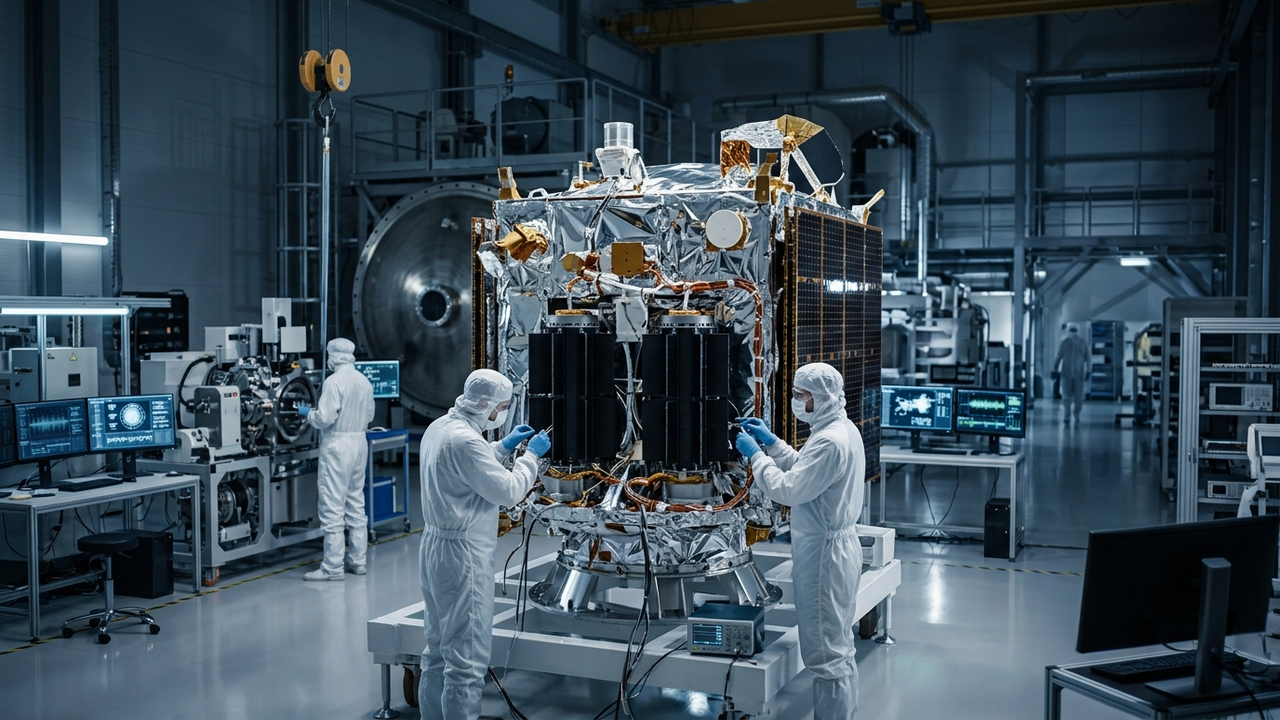
Following the successful inaugural Beta Voltaic power demonstration (BOHR), Miami-based City Labs is now preparing its second orbital nuclear demonstration. This next phase will focus on Radioisotope Heater Units (RHUs), aiming to establish critical technologies necessary for sustained lunar presence and enabling missions to endure the two-week-long, extremely cold lunar night.
Technical and Operational Details
- Beta Voltaic Power (BOHR): The beta voltaic batteries developed by City Labs generate electricity directly from the beta particles (electrons) emitted during the decay of a radioactive isotope. These nuclear batteries can provide stable, low-level power for extended periods in environments where conventional solar cells are ineffective, such as during the lunar night. The initial BOHR demonstration successfully validated this technology’s efficacy in a space environment.
- Radioisotope Heater Units (RHUs): The focus of the second demonstration, RHUs are passive heating systems that utilize the decay heat from radioactive isotopes to maintain the operating temperature of spacecraft components. With lunar night temperatures plummeting below -170°C, RHUs are crucial for preventing electronics and scientific instruments from freezing. They are employed to protect vital components even when primary power systems are inactive.
- Challenges of Lunar Power Supply: The lunar surface experiences extended periods of darkness, where solar power is unavailable, coupled with extreme temperature fluctuations. Relying solely on conventional batteries or solar cells is insufficient to meet the power and thermal management demands of long-term lunar operations. Nuclear power sources represent one of the most promising solutions to these formidable challenges.
Background and Industry Context
NASA’s Artemis program and other international lunar exploration missions aim to establish a sustainable human presence and bases on the Moon. This necessitates uninterrupted, stable power supply and thermal management even during periods of darkness or in permanently shadowed regions. Nuclear power technology has been utilized in deep-space missions (e.g., Mars rovers, Voyager probes) since the Apollo era, but long-term lunar infrastructure requires more advanced, miniaturized systems. Companies like City Labs are at the forefront of developing innovative nuclear power solutions to address this emerging demand.
Strategic Significance and Outlook
The success of City Labs’ second orbital nuclear demonstration will mark a critical technological milestone for enabling a sustained human presence on the Moon. Nuclear power technologies like BOHR and RHUs will provide the foundational power and thermal management for lunar rovers, stationary scientific payloads, and future lunar bases. This will significantly expand the scope and duration of scientific investigations and resource exploration on the Moon, ultimately paving the way for deep-space missions to Mars and beyond. Establishing the safety and reliability of nuclear power technologies is indispensable for the success of future space exploration endeavors.
Source: #
Get our weekly technology intelligence — free
Receive an infographic that lets you judge at a glance whether each field’s analysis report is worth reading.
Subscribe Free — Weekly Tech Intelligence
By subscribing, you’ll receive Troy-Technical’s weekly technology intelligence newsletter.
- Your email and selected fields are used only to deliver the newsletter.
- We never share your information with third parties.
- You can unsubscribe anytime via the link in each email.
See our Privacy Policy for details.
Takes about a minute · Unsubscribe anytime








Comments