Key Findings
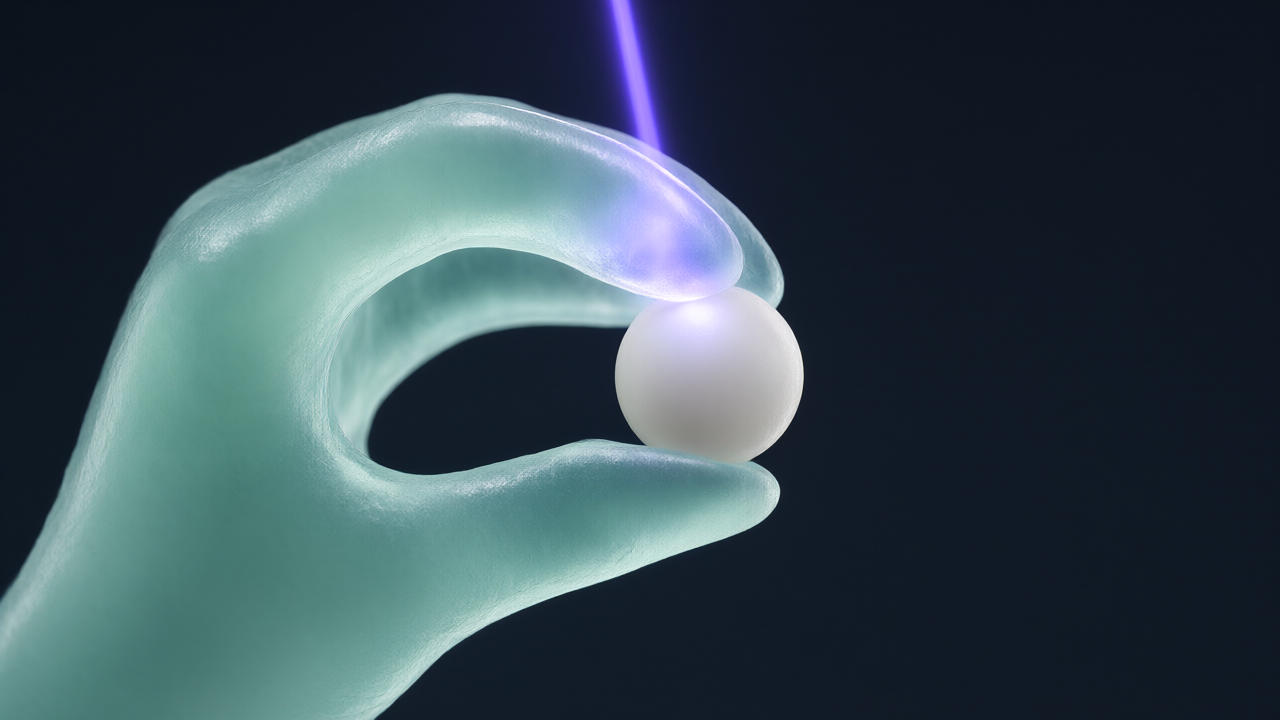
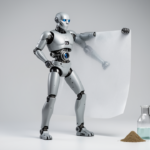
A joint research team from Jeonbuk National University and the Korea Advanced Institute of Science and Technology (KAIST) has developed the Ionograsper, an ionic soft robot capable of detecting and grasping objects in response to light. The core innovation is a single soft material that integrates sensing and actuation functions, eliminating the need for separate sensors and actuators. The findings were published as a cover article in the journal Advanced Materials.
Technical Details
The Ionograsper operates through two distinct mechanisms integrated into one ionic polymer material:
- Proximity Sensing: The robot monitors ion redistribution within the material. When a charged object approaches, its electric field alters the ion distribution, generating an electrical signal without requiring a dedicated power supply for sensing.
- Bidirectional Actuation: Movement is driven by light and moisture. Exposure to low-intensity ultraviolet (UV) light causes azobenzene molecules to undergo structural changes, triggering moisture evaporation and creating nanoscale pores. This stabilizes the deformed shape for more than 10 minutes after the light is switched off without further energy input. Once the light is removed, the material reabsorbs moisture at different rates on its two sides, causing it to bend in the opposite direction before gradually returning to its original shape.
Background and Context
Conventional soft robots typically rely on separate components for sensing and movement, which increases the number of wires and components, thereby complicating system design. Furthermore, these traditional systems often require a continuous energy supply to maintain a specific posture. The Ionograsper, inspired by the sensing and trapping mechanisms of the Venus flytrap, addresses these limitations by consolidating functions into a single material.
Significance and Outlook
By reducing structural complexity and energy requirements, this material provides a foundation for physical artificial intelligence (AI) robots. Professor Kim Yong-min and Professor Moon Hong-chul intend to integrate this material with AI-based control technologies to create robots that can interact flexibly with people and objects in real-world environments.
Get our weekly technology intelligence — free
Receive an infographic that lets you judge at a glance whether each field’s analysis report is worth reading.
Subscribe Free — Weekly Tech Intelligence
By subscribing, you’ll receive Troy-Technical’s weekly technology intelligence newsletter.
- Your email and selected fields are used only to deliver the newsletter.
- We never share your information with third parties.
- You can unsubscribe anytime via the link in each email.
See our Privacy Policy for details.
Takes about a minute · Unsubscribe anytime