Key Findings
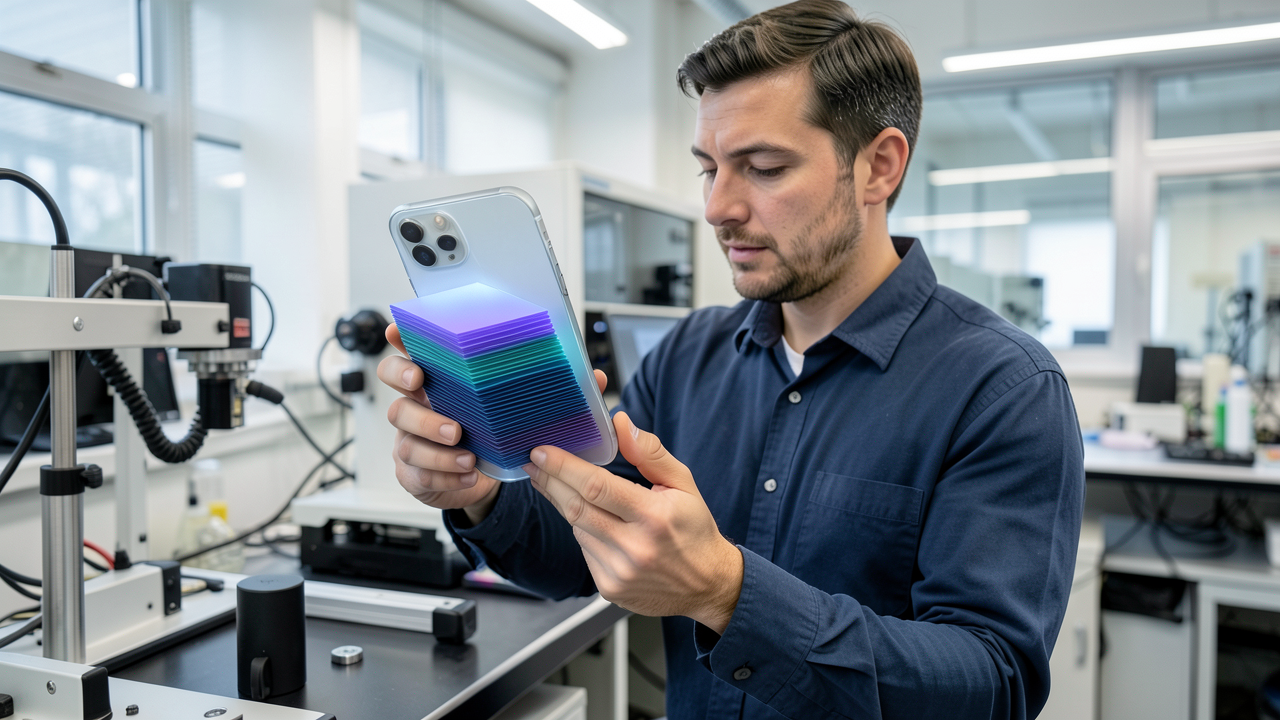
Apple has introduced a groundbreaking manufacturing technology for its forthcoming foldable iPhone, dubbed ‘Duo.’ This innovative process involves precisely 3D printing up to 25 layers of a custom photoresist material to entirely eliminate any potential surface undulations or ripples in the device’s folding mechanism. This represents an unprecedented approach in the mass production of complex mechanical components and holds the potential to dramatically enhance the quality and durability of foldable devices.
Technical / Clinical Details
The manufacturing process comprises two critical elements. First is the ability to 3D print multiple layers (up to 25) of a custom photoresist. Photoresist, typically a light-sensitive resin used for creating intricate patterns in semiconductor manufacturing, has been ingeniously applied by Apple for additive manufacturing to fill microscopic surface irregularities with sub-millimeter precision. Second is the ‘selective assembly’ process, powered by AI algorithms. This involves the AI analyzing and selecting the most compatible device body for each individual hinge. Furthermore, each manufacturing unit is individually measured, and based on these precise measurements, varying thicknesses of resin are printed at specific, different locations on the device. While such highly customized, individualized manufacturing approaches are very unconventional for mass production lines, Apple aims to maximize both the durability and aesthetic appeal of the foldable device’s hinge section through this method.
Background & Context
The foldable smartphone market is growing, but issues surrounding hinge durability and display creases have long been consumer concerns. Traditional manufacturing methods have found it exceedingly difficult to achieve a perfectly smooth folding surface due to component tolerances and material properties. Apple’s new technology offers an innovative solution to these fundamental challenges through individually optimized, precise material layering. This pushes the boundaries of manufacturing technology, showcasing Apple’s commitment to achieving high-precision assembly and material customization at scale.
Strategic Significance & Outlook
Apple’s adoption of this custom photoresist 3D printing technology for the foldable iPhone ‘Duo’ could redefine quality standards for foldable devices. Should this technology prove successful, similar precision manufacturing approaches might proliferate among other foldable device manufacturers. Furthermore, the fusion of AI with precise material layering techniques represents a technological advancement with broad implications, applicable not only to the electronics industry but also to other fields demanding high precision, such as medical devices and aerospace components. This is expected to accelerate the development of more durable and aesthetically superior next-generation devices.
Source: https://finance.biggo.com/news/14fd3913-2ad4-4477-9373-9244f6c2f07b
Get our weekly technology intelligence — free
Receive an infographic that lets you judge at a glance whether each field’s analysis report is worth reading.
Subscribe Free — Weekly Tech Intelligence
By subscribing, you’ll receive Troy-Technical’s weekly technology intelligence newsletter.
- Your email and selected fields are used only to deliver the newsletter.
- We never share your information with third parties.
- You can unsubscribe anytime via the link in each email.
See our Privacy Policy for details.
Takes about a minute · Unsubscribe anytime








Comments