Background
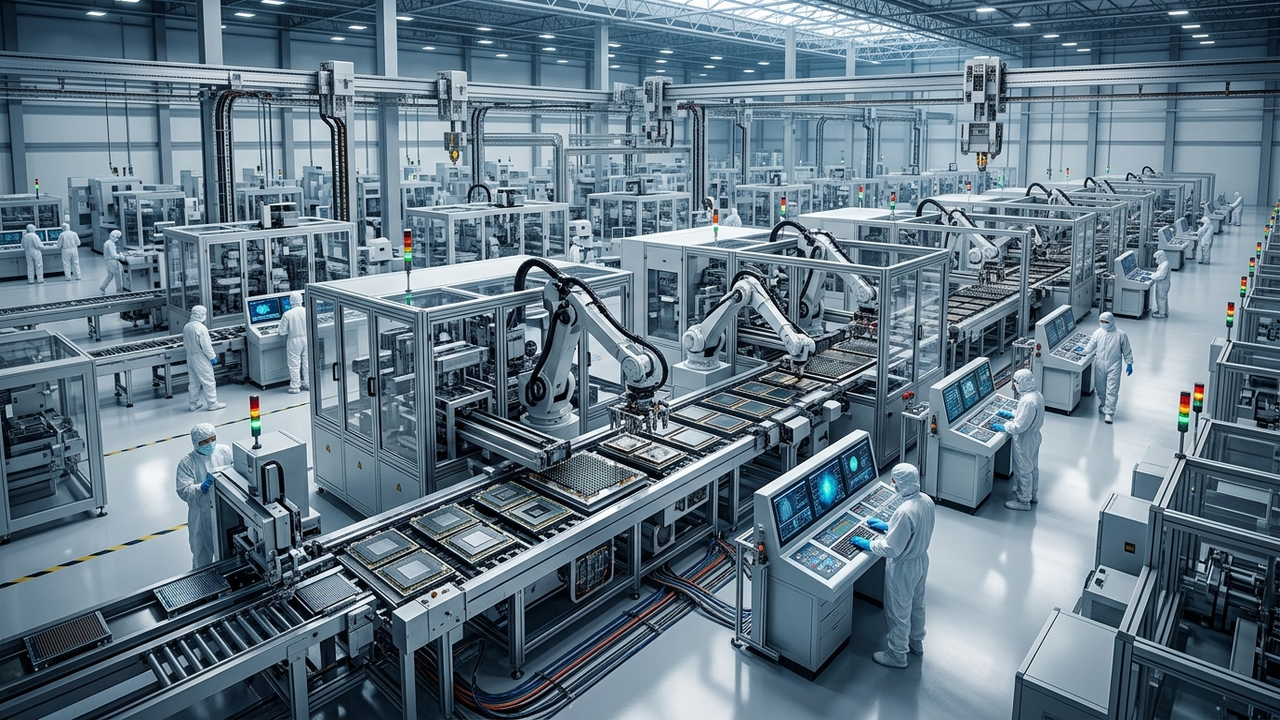
The rapid evolution and widespread adoption of AI technology have created an explosive demand for high-performance AI chips. Satisfying this demand necessitates advanced packaging solutions capable of overcoming the limitations of conventional techniques, positioning advanced packaging as a critical bottleneck in the modern semiconductor supply chain. Nationally, China has strategically prioritized reducing its external dependence in the semiconductor industry and achieving technological self-sufficiency. The aggressive investments by the three OSAT leaders represent concrete steps toward realizing this national objective. Furthermore, in an increasingly competitive global AI semiconductor market, bolstering advanced packaging capabilities is a crucial determinant of international competitiveness, especially amid intensifying US-China technological rivalry.
Key Findings
China’s three preeminent Outsourced Semiconductor Assembly and Test (OSAT) providers—JCET, Tongfu Microelectronics, and Huatian Technology—recorded substantial increases in net profit during the first half of 2026. This growth was predominantly driven by the robust demand for AI semiconductors. Individually, JCET reported a 79.4% year-over-year surge in net profit, Tongfu Microelectronics experienced an impressive increase of up to 337%, and Huatian Technology saw a 259% expansion. Capitalizing on these strong financial results, the trio has collectively earmarked capital expenditures exceeding 15 billion RMB (approximately $2.2 billion USD) specifically for the development and expansion of advanced packaging technologies.
Technical Details
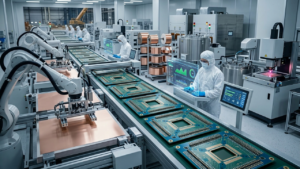
Advanced packaging technologies are fundamental for achieving significant performance enhancements and miniaturization in AI semiconductors and High-Performance Computing (HPC) applications. Key areas include chiplet integration, 2.5D/3D stacking, and High Bandwidth Memory (HBM) implementation. The investments from these Chinese OSAT leaders are heavily concentrated in these critical domains: JCET is constructing a new advanced packaging facility in Shanghai’s Lingang area, backed by a 7.8 billion RMB investment. Tongfu Microelectronics, partly driven by next-generation AMD processor projects, successfully raised 4.2 billion RMB, with 888 million RMB specifically allocated for memory production expansion. Huatian Technology, meanwhile, plans a 3 billion RMB investment for a memory-related factory in Nanjing, projected to have an annual capacity of 430 million units. These strategic capital outlays clearly underscore China’s ambition to secure comprehensive capabilities across the entire AI chip supply chain, spanning from design and manufacturing to final packaging.
Strategic Significance & Outlook
The substantial investments by China’s top three OSATs into advanced packaging hold the potential to significantly reshape the global semiconductor packaging landscape. Should these investments prove successful, China could solidify a more robust position in advanced AI semiconductor packaging, thereby expanding its influence throughout the global semiconductor supply chain. This expansion is anticipated to substantially boost the supply capacity of AI chips, potentially enabling a broader spectrum of AI applications in the future. However, amidst escalating geopolitical tensions and intensifying technological rivalry, the advancements made by Chinese companies may also introduce new dynamics and challenges within the international semiconductor ecosystem, making their future trajectory a closely watched phenomenon.
Get our weekly technology intelligence — free
Receive an infographic that lets you judge at a glance whether each field’s analysis report is worth reading.
Subscribe Free — Weekly Tech Intelligence
By subscribing, you’ll receive Troy-Technical’s weekly technology intelligence newsletter.
- Your email and selected fields are used only to deliver the newsletter.
- We never share your information with third parties.
- You can unsubscribe anytime via the link in each email.
See our Privacy Policy for details.
Takes about a minute · Unsubscribe anytime




Comments