
Key Findings
A report from the Center for Strategic and International Studies (CSIS) reveals that the current semiconductor memory shortage is attributable to both a structural increase in demand driven by AI applications and typical cyclical market fluctuations. Critically, the rapid expansion of AI data centers has dramatically increased demand for High Bandwidth Memory (HBM), which is indispensable for AI workloads, and this has exacerbated the supply of traditional DRAM. The concentration of commercial-scale HBM production in Asia, particularly in South Korea and Taiwan, presents significant supply chain risks and national security concerns, even as investments in U.S. domestic semiconductor manufacturing advance.
Technical / Clinical Details
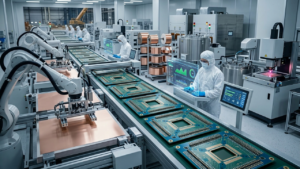
HBM is a specialized memory technology vital for AI workloads, offering superior bandwidth and lower power consumption crucial for maximizing the performance of AI accelerators and high-performance GPUs. While HBM is fabricated using standard DRAM, it necessitates advanced packaging capabilities (e.g., CoWoS) to stack multiple DRAM dies and integrate them with other chiplets. This additional, complex process not only constrains HBM supply but also strains the overall supply of conventional DRAM. The report emphasizes the geographical concentration of commercial HBM production in Asia, primarily South Korea and Taiwan. Despite ongoing investments in semiconductor manufacturing within the United States, this geographical centralization poses a potential single point of failure and raises significant national security concerns, underscoring the fragility of critical supply chains.
Background & Context
Historically, the memory market has been characterized by cyclical supply-demand fluctuations, often referred to as the “memory cycle.” However, the advent of AI has introduced a new, structural demand for HBM. This fundamental shift is recognized as a long-term trend, not merely a temporary shortage, driven by the continuous evolution and proliferation of AI technologies. The fact that leading AI companies such as NVIDIA, Google, AMD, and Amazon consume the majority of the HBM supply illustrates its immense importance to the entire AI ecosystem. Simultaneously, in an era of heightened geopolitical risks, the concentration of critical semiconductor technology production in specific regions poses an urgent challenge for governments worldwide concerning supply chain resilience and national security.
Strategic Significance & Outlook
The HBM supply shortage and the geographical concentration of its supply chain are critical issues impacting both AI infrastructure expansion and national security strategies. Moving forward, nations, including the United States, are likely to pursue strategies aimed at localizing HBM manufacturing capabilities or diversifying production to friendly regions to enhance supply chain resilience. Additionally, accelerating technological innovation in HBM production to establish more efficient and cost-competitive manufacturing methods will be essential. Addressing these structural challenges is indispensable for the sustainable development of AI technologies and the stabilization of the global semiconductor supply chain, ensuring that the foundational components for future innovation are secure and robust.
Source: https://www.csis.org/analysis/beyond-memory-cycle-ai-hbm-and-new-semiconductor-shortage
Get our weekly technology intelligence — free
Receive an infographic that lets you judge at a glance whether each field’s analysis report is worth reading.
Subscribe Free — Weekly Tech Intelligence
By subscribing, you’ll receive Troy-Technical’s weekly technology intelligence newsletter.
- Your email and selected fields are used only to deliver the newsletter.
- We never share your information with third parties.
- You can unsubscribe anytime via the link in each email.
See our Privacy Policy for details.
Takes about a minute · Unsubscribe anytime








Comments