Key Findings
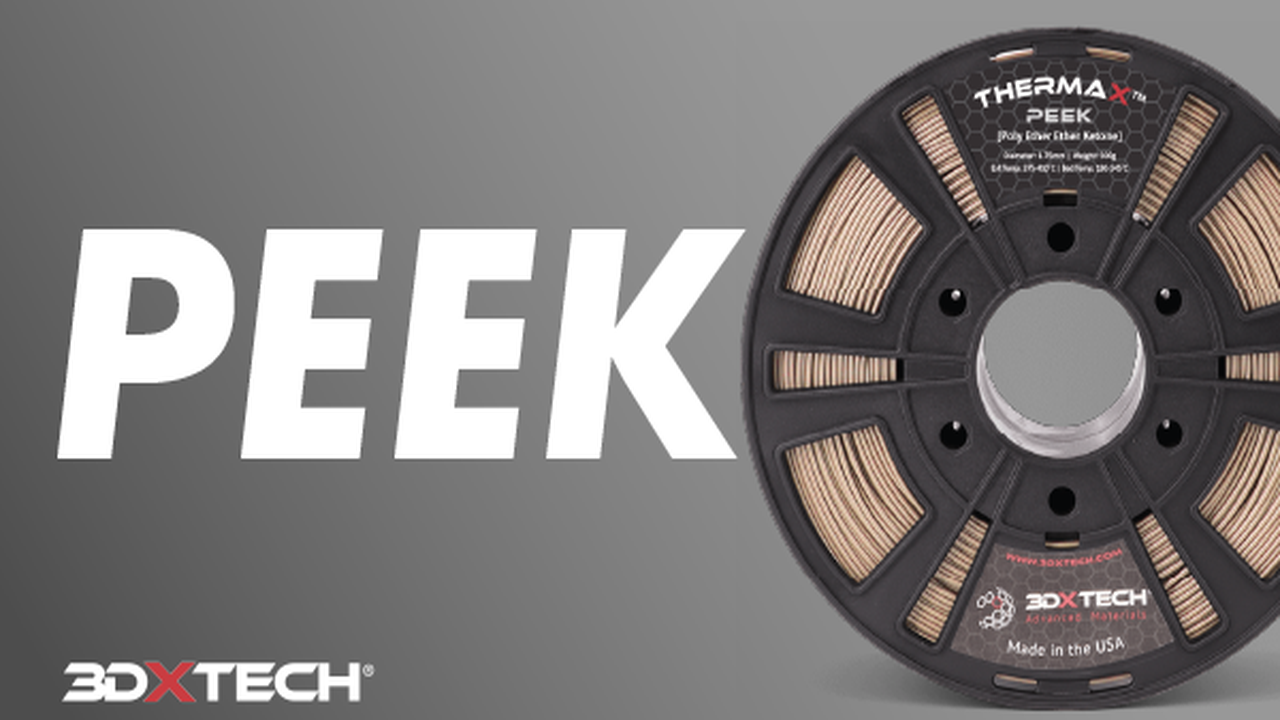
Polyetheretherketone (PEEK) filament has solidified its position as the de facto benchmark in high-performance 3D printing due to its extraordinary mechanical properties, thermal stability, and chemical resistance. PEEK’s unique balance of strength, heat resistance, and durability, particularly under high-temperature conditions, surpasses most other materials, making it a preferred choice for extremely demanding applications in aerospace, automotive, medical, and industrial manufacturing.
Technical & Clinical Details
PEEK is a semi-crystalline, high-performance thermoplastic polymer with exceptional properties derived from its molecular structure. It boasts a high melting point of approximately 343°C and can sustain continuous operating temperatures up to 250°C, retaining its mechanical properties even in high-heat environments. This characteristic is critical for components used near engines or within high-temperature process equipment. Furthermore, PEEK exhibits high resistance to a wide range of chemicals, including acids, bases, organic solvents, and hydrolysis, making it suitable for sterilization processes in medical applications and chemical plants. Its superior wear resistance and excellent biocompatibility also contribute to its adoption in applications requiring long-term reliability and safety, such as medical implants (bone substitutes, dental) and food processing equipment.
In 3D printing, PEEK filament enables the custom manufacturing of complex parts. However, due to its high melting point and crystallization behavior, high-performance 3D printers with precise temperature control and a suitable build environment (e.g., heated chambers) are essential. Additive manufacturing with PEEK allows for on-demand production of lightweight, high-functionality components, achieving design freedom and cost efficiency difficult to match with traditional subtractive machining or injection molding.
Background & Context
In the aerospace industry, PEEK is increasingly replacing traditional metal components to enhance fuel efficiency and reduce aircraft weight. The automotive sector is seeing rising demand for PEEK in under-the-hood parts and lightweight structural components. In the medical field, PEEK is crucial for customized implants and surgical instruments tailored to individual patient needs. Industrial manufacturing benefits from PEEK’s use in chemically resistant pump components and high-temperature bearings and gears, contributing to extended product life and reduced maintenance costs.
Strategic Significance & Outlook
The 3D printing market for PEEK filament is projected for continuous growth. Advances in materials science are expected to lead to the development of more processable PEEK grades and enhanced composite technologies. Concurrently, as 3D printer technology becomes more high-performing and cost-effective, more companies will be able to adopt PEEK for additive manufacturing. This will further expand PEEK’s application range in sectors demanding high reliability and performance, such as aerospace, medical, automotive, and defense, driving innovative product development.








Comments