Key Findings
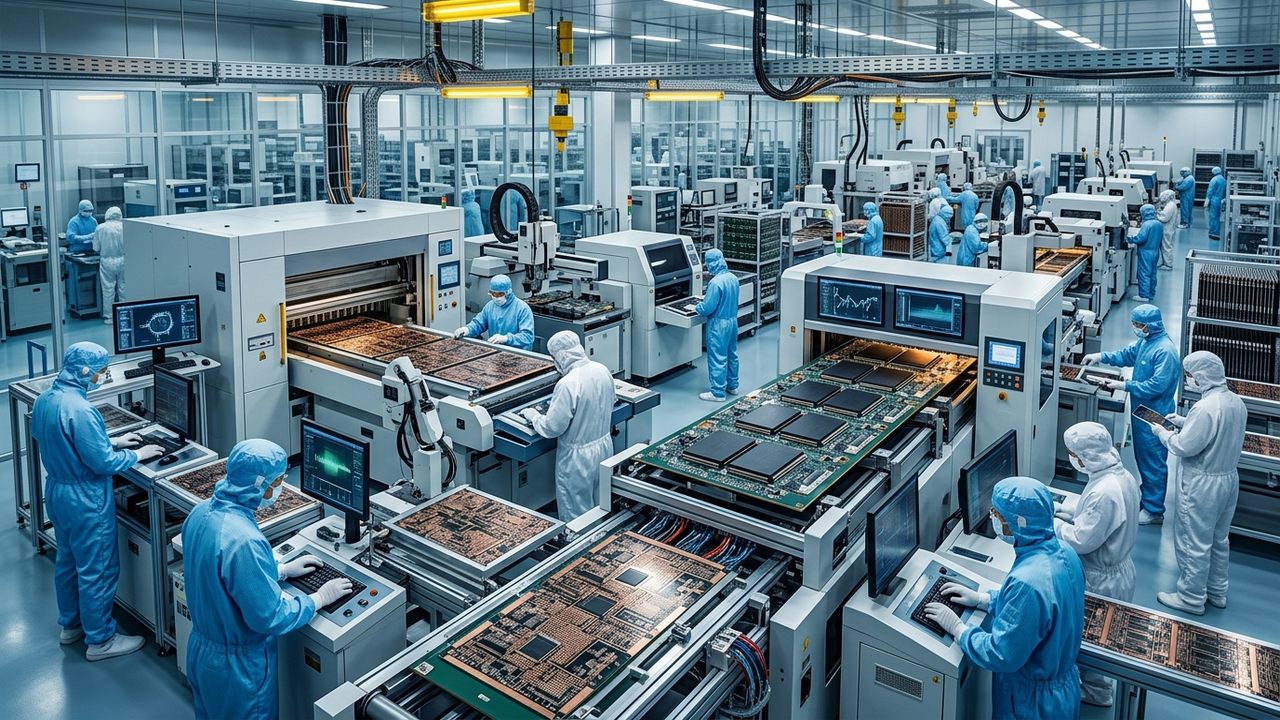
The relentless pursuit of higher computational power and the consequent physical enlargement of AI chips have resulted in a critical global shortage of high-end Ajinomoto Build-up Film (ABF) substrates. This supply crunch has sparked fierce competition among Taiwan’s leading substrate manufacturers and related semiconductor equipment suppliers, all scrambling to rapidly expand production capacity, which is severely impacting the overall supply-demand equilibrium of the AI chip market.
Technical / Clinical Details
ABF substrates serve as crucial interposers in high-performance AI chips and High-Performance Computing (HPC) processors, connecting the chip to the printed circuit board (PCB). Their inherent thinness, low dielectric loss, and fine circuit patterning capabilities enable multi-layer interconnections and high-frequency signal transmission, making them indispensable for efficiently integrating High Bandwidth Memory (HBM) and large processor dies. As AI chips grow in size and complexity, they demand larger and more intricate ABF substrates, significantly increasing manufacturing complexity and time. Specifically, the technology required to precisely form thousands or even tens of thousands of microscopic wiring vias is exceptionally advanced, limiting the number of suppliers capable of delivering high-quality products.
Background & Context
The explosive adoption of generative AI has led to an unprecedented deployment of high-performance AI accelerators in data center AI servers. This has caused demand for ABF substrates from AI chip manufacturers to surge at a pace far exceeding initial predictions. While substantial investments have been made in the ABF substrate market over the past few years, the rate of AI chip evolution and the increasing sophistication of their specifications have outstripped these efforts, leading to the current supply deficit. Taiwan is a global hub for leading ABF substrate manufacturers, including Unimicron, Kinsus Interconnect Technology, and ASE Group, playing a pivotal role in the global supply chain. Consequently, the production expansion race in Taiwan is a matter of critical importance for the global AI industry.
Strategic Significance & Outlook
The shortage of high-end ABF substrates directly impacts AI chip production plans and could temporarily slow the overall growth rate of the AI industry. However, this challenge simultaneously presents a significant opportunity for substrate manufacturers and equipment suppliers for new investments and technological innovation. Taiwanese companies are expected to continue substantial capital investments to boost production capacity. Furthermore, material manufacturers are anticipated to accelerate the development of next-generation ABF materials that are easier to manufacture and offer improved performance. While it is expected to take several years to alleviate this supply-demand imbalance, in the long term, a stable ABF substrate supply system will be established, reinforcing the foundation for the sustained development of the AI industry.
Get our weekly technology intelligence — free
Receive an infographic that lets you judge at a glance whether each field’s analysis report is worth reading.
Subscribe Free — Weekly Tech Intelligence
By subscribing, you’ll receive Troy-Technical’s weekly technology intelligence newsletter.
- Your email and selected fields are used only to deliver the newsletter.
- We never share your information with third parties.
- You can unsubscribe anytime via the link in each email.
See our Privacy Policy for details.
Takes about a minute · Unsubscribe anytime






Comments