TROY TECHNICAL · BEGINNER’S GUIDE
READ THIS FIRSTAdhesives and encapsulants — An Introduction
More than sticking things together: designing for loads, moisture and heat.
Japanese version →Joining metal to plastic, protecting electronics from moisture and carrying heat away from a chip require different jobs from materials that may occupy similar spaces. Success is not simply choosing the strongest glue. Materials, surfaces, geometry, processing and service conditions must work together.
01Bonding starts with contact at the surface
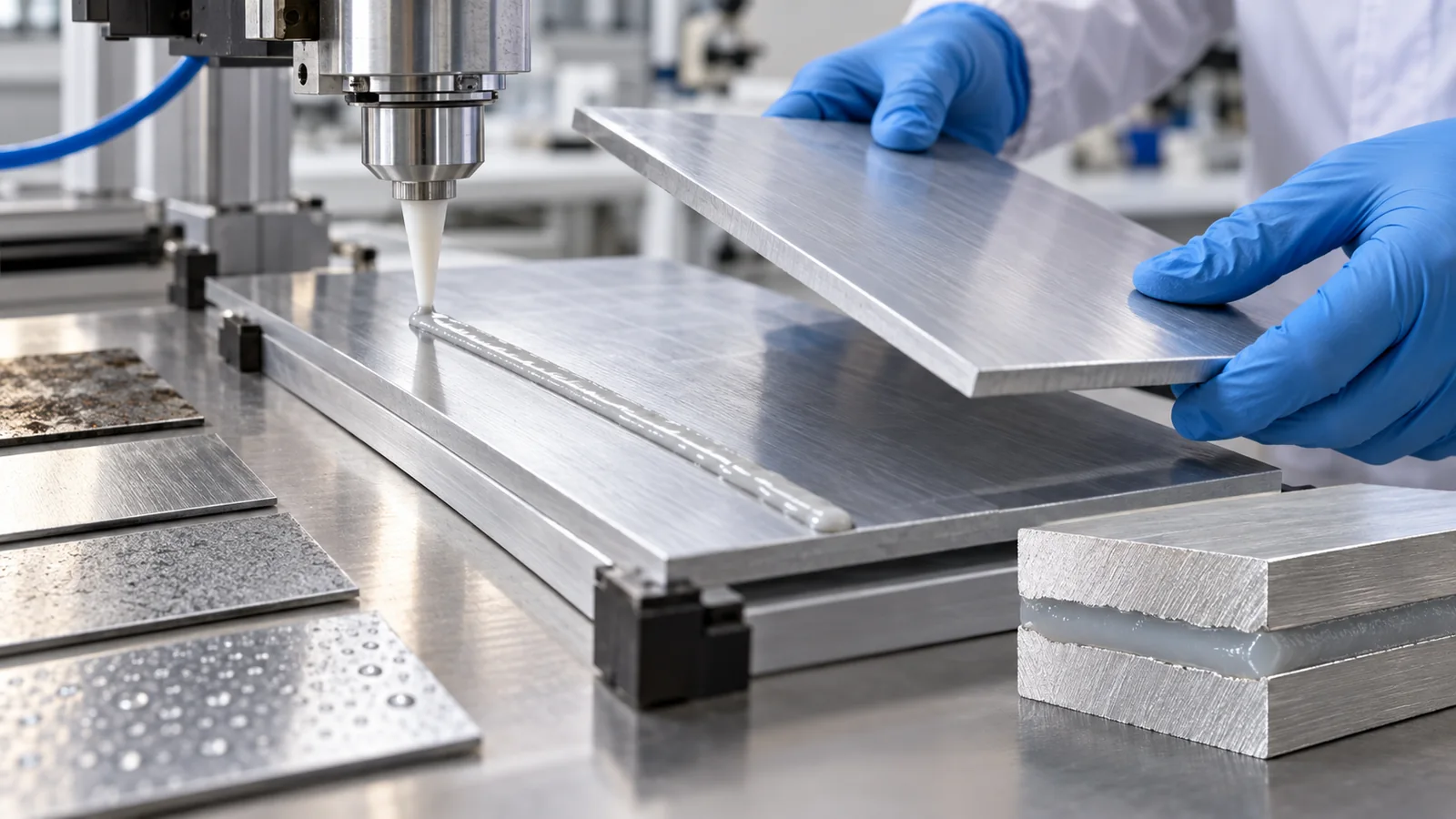
An adhesive must spread over and make adequate contact with the surface: wetting. Oil, contamination or a weak surface layer can cause failure even when the adhesive itself is strong. Roughening is not automatically helpful; cleaning and treatment must suit the materials.
A joint contains interfaces, adhesive material and the joined parts. Inspect where failure occurs before deciding what to improve. Interfacial separation and fracture within the adhesive need not respond to the same remedy.
02Understand setting and the process needed before use
Materials may set by curing into a molecular network, drying as water or solvent leaves, or cooling from a melt. UV curing depends on whether light reaches the required region. Pressure-sensitive tapes use another approach, establishing contact under pressure.
A firm surface does not prove completion throughout a layer. Dispensed quantity, thickness, mixing, temperature, time and illumination are process variables. Property values in a datasheet must be read with those conditions.
Background: [1]
03Harder and thicker are not universal improvements
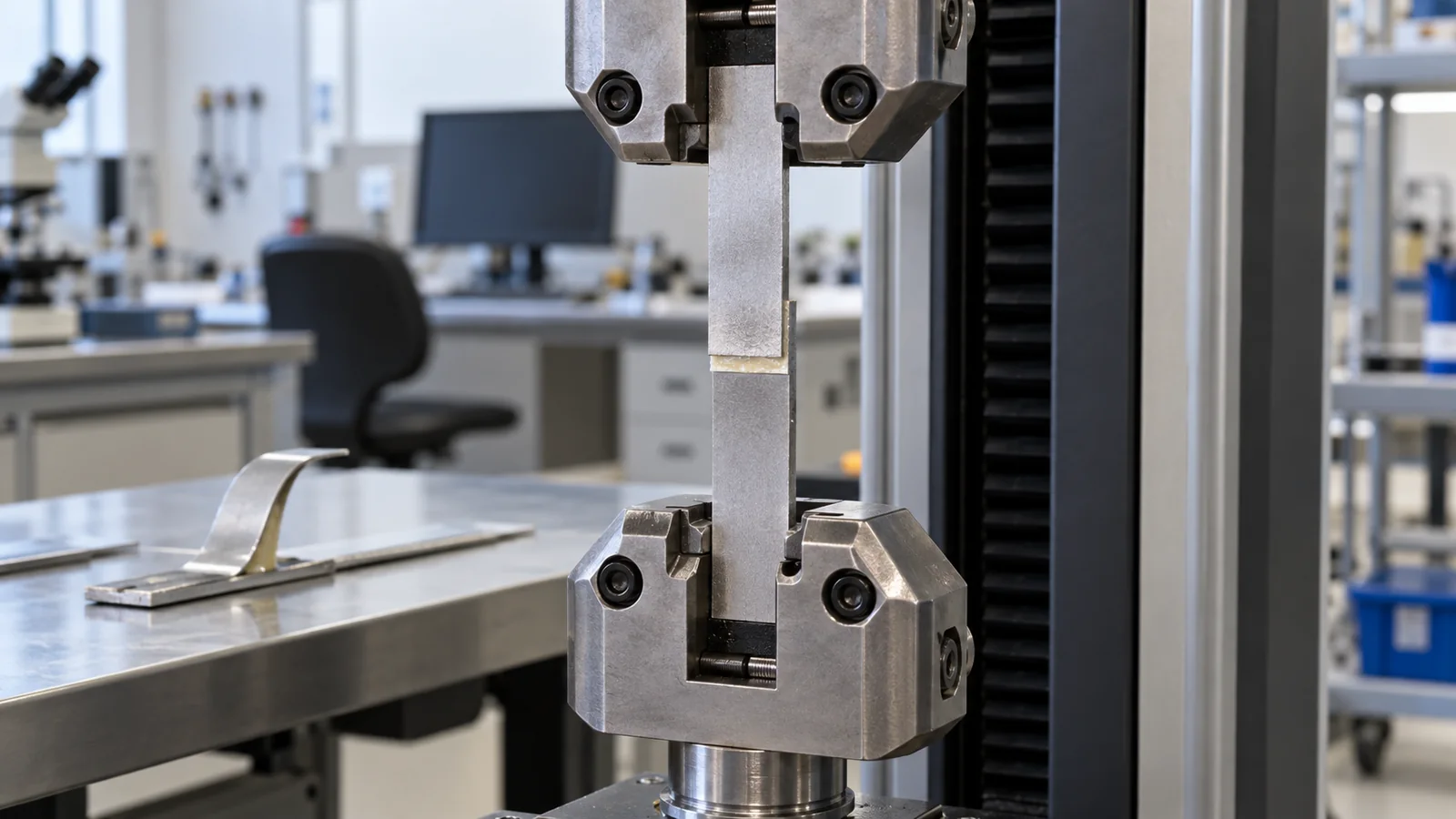
Joints experience tension, shear and peel. A load spread over an area differs from one concentrated at an edge. Changing overlap or edge geometry can be more effective than changing adhesive alone.
Different materials expand differently as temperature changes. A rigid bond may concentrate the resulting stress. Compliance can help, but too much deformation or long-term creep can also be harmful. Suitable stiffness and thickness depend on the job.
Background: [1]
04Electronic assemblies need more than adhesion
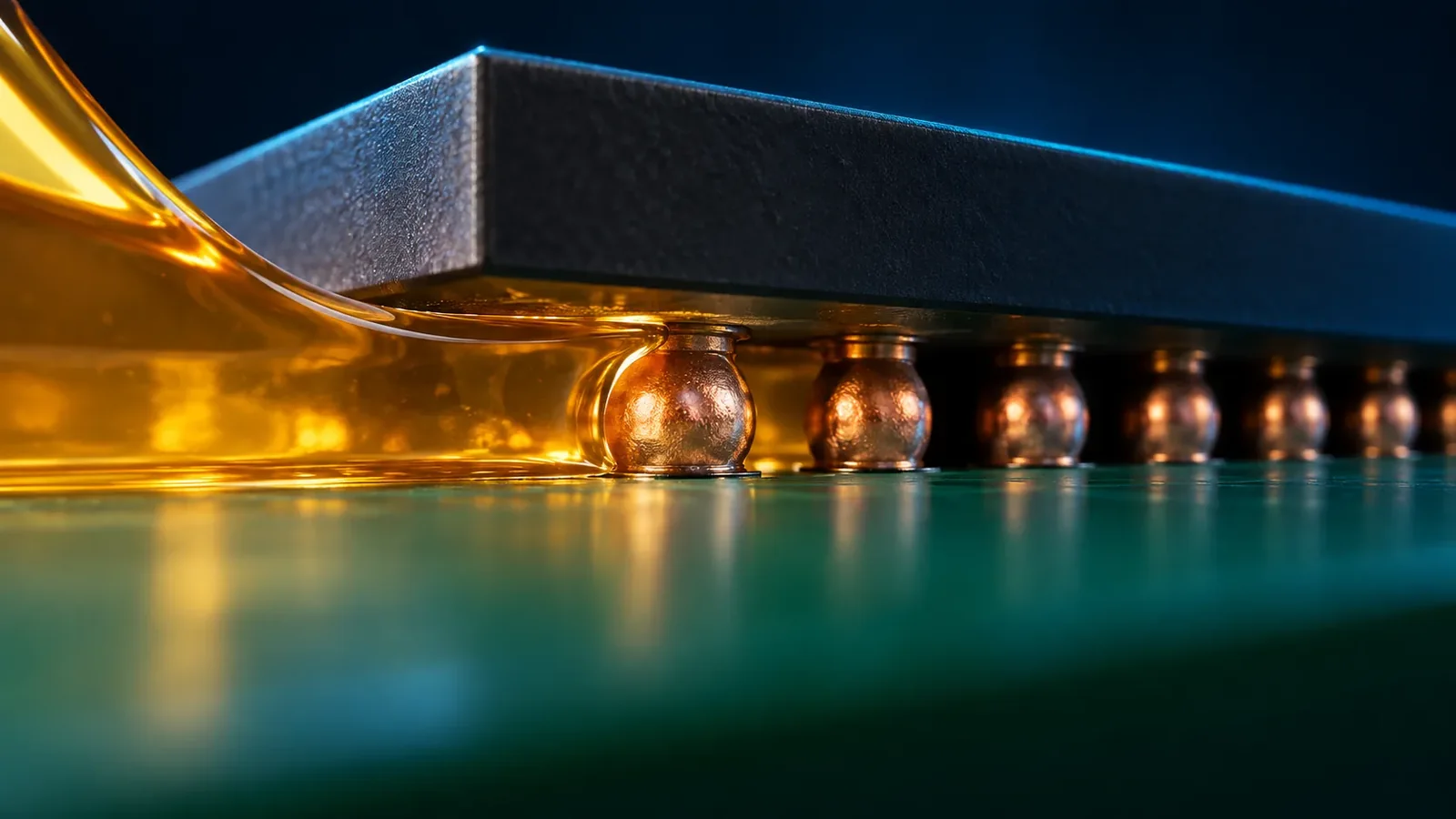
Underfills support interconnects beneath a chip. Encapsulants protect against moisture and mechanical influences; thermal interface materials bridge gaps for heat transfer. Electrically conductive and insulating formulations serve different purposes.
Adding thermally conductive filler also changes viscosity, processability and stiffness. A good bulk moisture barrier may still have vulnerable edges or exits. Evaluate function in the assembly, rather than one favourable material property.
Background: [3]
05Read joint performance through conditions and failure modes
Results depend on adherend material, overlap, layer thickness, temperature, loading rate and preparation. Peel and lap-shear values are not interchangeable entries in a simple ranking.
Consider moisture, thermal cycling, vibration and chemicals in service, not just initial strength. Repair, separation and recovery may also matter. Once the joined materials, protection needs and loads are clear, the routes below help select a relevant chemistry or process.
Background: [1]
Connect the ideas in one situation
ILLUSTRATIVE SCENARIO — NOT A PERFORMANCE CLAIM
Suppose a metal part is bonded to a polymer lid
Prepare the surfaces, define the overlap and consider differential thermal expansion. If the joint must keep water out, adhesion alone is not enough: seal continuity and edge geometry matter.
Check leakage and failure after representative environmental exposure, not only an initial pull test. Adhesive strength and joint reliability are related but different.
Return to the starting idea
Bonding joins, encapsulation protects, and thermal interface materials transfer heat. Similar appearance does not mean identical function: evaluate the whole joint.
You do not need to memorize every technology name. Understanding the intended improvement, the mechanism being changed and the conditions needed to demonstrate it gives you a foundation for the detailed articles. Choose one route that matches your question.
Choose your next article
Read a route from top to bottom, or select just the question you need. You do not have to read everything.
Bonding and evaluation
Choose a material family
Roles in electronics
Browse all technical articles in this field (25)
- ACF Bonding (Anisotropic Conductive Film)
- MR-MUF
- UV-326 and the Regulation of UV Absorbers
- UV-Curable Clear Resins
- Underfill and Encapsulants
- Epoxy Resin
- UV Bonding of Glass
- Thermal Pads (Gap Pads)
- Silicones
- Die Attach
- Adhesive Tapes and Process Tapes
- Bio-Based Adhesives and Encapsulants
- Barrier Properties and Coatings
- Heat Sinks
- Pastes for Electronics Assembly
- Polyurethanes and Elastomers
- Polymer Blends and Fillers
- Semiconductor Package Molding Why the “black resin” is a structural material
- Semiconductor Encapsulants
- Adhesives
- Adhesive Strength Testing
- Thermal Interface Materials (TIM)
- What the Coefficient of Thermal Expansion Is
- Automotive Silicones and Encapsulants
- Thermally Conductive Pastes and Gap Fillers
Sources and scope
This introductory synthesis connects the existing technical articles. Its grouping and design scenarios are explanatory, not standard classifications or test results. It does not catalogue current records, product availability or approvals, or forecast costs. Foundational references are below; linked articles provide more detailed technical sourcing.